In the competitive corporate landscape, thoughtful branding separates forgettable gestures from lasting impressions. A vacuum flask set offers practical value, premium appeal, and continuous brand exposure. Unlike disposable promotional products, a high-quality flask water bottle or tea flask integrates into daily routines—keeping your brand visible long after the initial exchange.
For companies investing in corporate gifts, employee rewards, or promotional merchandise, a vacuum flask set delivers durability, sustainability, and strong recall. This guide explores why it stands out, how to choose the right set, and how to maximize branding impact.
Vacuum Flask Set – Why It Outperforms Traditional Corporate Gifts
Promotional items often fail because they lack utility. A vacuum flask set solves that problem.
1. Daily Utility Equals Daily Brand Exposure
Recipients use a water flask at work, at the gym, while commuting, and during travel. Each use reinforces brand familiarity.
Unlike novelty items:
It serves a functional purpose.
It aligns with modern sustainability values.
It reflects premium positioning.
2. Temperature Retention Technology
Vacuum insulation technology maintains:
Hot beverages for 8–12 hours
Cold beverages for 12–24 hours
According to research shared by the U.S. Department of Energy, vacuum insulation significantly reduces thermal transfer, making double-wall stainless steel flasks energy-efficient and effective.
3. Premium Perception
A stainless steel flask bottle conveys:
Professionalism
Attention to quality
Long-term value
Compared to disposable plastic alternatives, a tea flask communicates environmental responsibility and brand integrity.
Vacuum Flask Set – Key Features That Define Quality
Double-Wall Stainless Steel Construction
Look for:
- Food-grade stainless steel (304 or 316)
- BPA-free lids
- Leak-proof seals
This ensures durability and hygiene.
Leak-Proof and Travel-Friendly Design
An effective flask water bottle must:
- Prevent spills
- Withstand movement
- Offer ergonomic grip
Capacity Options
Common sizes:
- 500ml (individual use)
- 750ml (extended workday)
- 1L+ (travel or executive gifting)
Custom Branding Potential
Branding methods include:
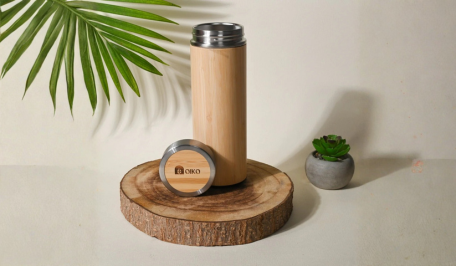
- Laser engraving
- Screen printing
- UV printing
Laser engraving offers longevity and premium appeal.
Vacuum Flask Set – Strategic Corporate Gifting Applications
Employee Welcome Kits
Integrate a vacuum flask set into onboarding kits. Pair with:
- Branded notebooks
- Custom tote bags
- Company apparel
This reinforces corporate identity from day one.
Client Appreciation Gifts
For high-value clients, include:
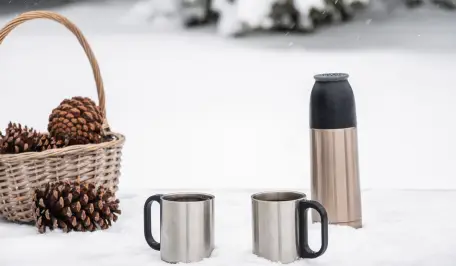
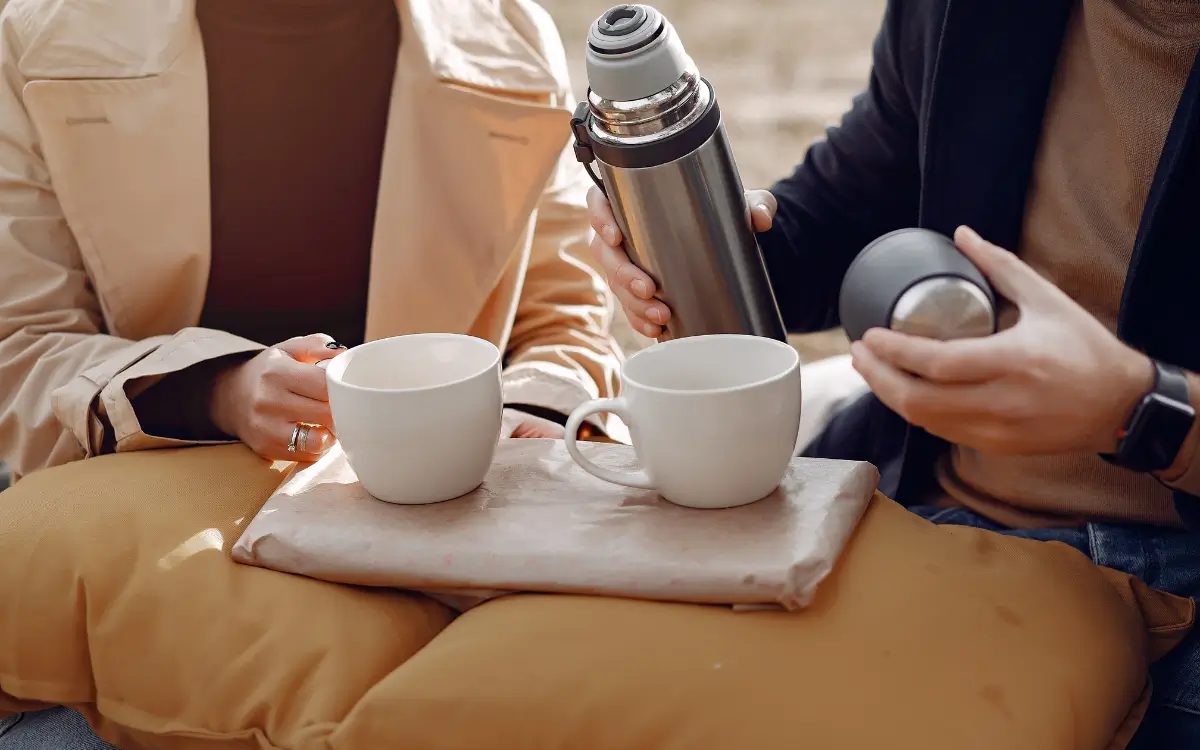
- Tea flask with matching cups
- Premium packaging box
- Personalized message
High-quality gifts signal relationship investment.
Event and Trade Show Giveaways
Instead of disposable swag:
- Offer limited-edition flask bottles
- Include QR codes linking to landing pages
- Track campaign conversions
Learn more about effective promotional strategy in our detailed guide on corporate branding essentials.
Vacuum Flask Set vs. Standard Flask Bottle: Comparative Overview
Feature | Standard Flask | Vacuum Flask Set |
Temperature Retention | Moderate | High (8–24 hrs) |
Brand Perception | Basic | Premium |
Durability | Medium | High |
Customization | Limited | Extensive |
Corporate Appeal | Average | Strong |
The vacuum flask set consistently delivers greater ROI in brand engagement.
Sustainability and Brand Responsibility
Sustainability drives purchasing decisions. Reusable water flasks reduce single-use plastic consumption.
According to environmental data from the United Nations Environment Programme, reducing plastic waste remains a global priority. Corporate gifting aligned with sustainability strengthens brand reputation.
Benefits:
- Lower environmental footprint
- Long lifecycle product
- Positive brand association
How to Choose the Right Vacuum Flask Set for Your Business
Step 1: Define Target Audience
For executives:
- Sleek metallic finishes
- Minimalist engraving
For mass corporate distribution:
- Durable matte finish
Bold logo placement
Step 2: Align with Campaign Goals
If goal is:
- Brand recall → large logo placement
- Premium positioning → subtle engraving
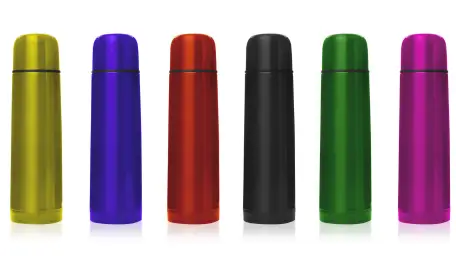
- Event marketing → bold, vibrant colors
Step 3: Packaging Matters
High-impact packaging increases perceived value:
- Magnetic closure boxes
- Custom inserts
- Thank-you cards
Customization Ideas for Maximum Impact
- Add employee names
- Include motivational messages
- Use limited edition seasonal designs
- Bundle with tea sachets or coffee packs
For digital marketing campaigns:
- Include QR codes
- Create hashtag challenges
- Integrate social sharing incentives
Frequently Asked Questions (FAQ)
- What makes a vacuum flask set better than a regular flask bottle?
A vacuum flask set uses double-wall insulation to maintain temperature longer and often includes cups or accessories, enhancing gifting value.
- Is a flask water bottle suitable for corporate gifting?
Yes. A flask water bottle combines daily functionality with brand visibility, making it ideal for corporate promotions.
- How long does a tea flask keep beverages hot?
High-quality vacuum insulation keeps tea hot for 8–12 hours, depending on build quality.
- Can I customize a vacuum flask set with my company logo?
Yes. Options include laser engraving, screen printing, and UV printing for durable branding.
- Are water flasks eco-friendly?
Reusable stainless steel water flasks reduce reliance on disposable plastic bottles and support sustainability goals.
- What capacity is ideal for corporate gifts?
500ml to 750ml suits most corporate applications, balancing portability and functionality.
Conclusion
A vacuum flask set delivers practical value, premium perception, and sustainable impact. Unlike disposable promotional items, it integrates into daily routines, reinforcing brand visibility through consistent use. For corporate gifting and digital marketing strategies, the vacuum flask set stands as a high-ROI branding instrument.
Explore premium customization options, integrate sustainability into your campaigns, and position your brand through functional excellence.
vacuum flask set, corporate gift flask, stainless steel flask bottle, custom water flask, tea flask gift set, branded flask bottle
Absolutely impressed with the vacuum flask set quality and branding. Premium finish, excellent heat retention, and perfect for corporate gifting. Highly recommended!
Afsal Bilal Tweet
Upgrade your corporate gifting with this premium vacuum flask set, designed for style and performance. Crafted with high-grade stainless steel, it ensures long-lasting temperature retention for hot and cold beverages. Ideal for executive gifts, client appreciation, and brand promotions.
Screen printing on promotional flask water bottles, including coordinated products such as a vacuum flask set, is a durable and scalable decoration method engineered for high-volume brand deployment. The technique applies ink directly to the bottle surface through a tensioned mesh screen and stencil configuration. This controlled ink transfer produces opaque, high-contrast graphics capable of withstanding repeated handling, washing, and transport. For organizations distributing branded drinkware at trade exhibitions, corporate events, or institutional programs, screen printing delivers predictable quality and cost control across large production runs.
Substrate Compatibility
Promotional flasks and coordinated vacuum flask set components are commonly manufactured from stainless steel, aluminum, BPA-free plastics such as Tritan, and powder-coated metal. Screen printing bonds effectively to these materials when paired with substrate-specific ink formulations and proper surface preparation.
Stainless steel and aluminum typically require degreasing and, in some cases, flame or corona treatment to improve surface energy and ink adhesion. Powder-coated bottles offer enhanced mechanical bonding due to their micro-textured finish. Plastic substrates demand inks engineered for flexibility and chemical compatibility to prevent cracking or delamination over time.
Printing Process Overview
Production begins with color-separated artwork. Each color requires an individual mesh screen coated with light-sensitive emulsion. The artwork is transferred to the screen through UV exposure, forming a hardened stencil that defines image areas.
During printing, each flask is secured on a rotary mandrel to maintain positional accuracy. Ink is deposited onto the screen and forced through open mesh sections using a calibrated squeegee. As the bottle rotates beneath the screen, the ink forms either a wrap-around design or a precisely located front-facing logo.
Following ink application, items enter a curing stage. UV-curable inks polymerize under ultraviolet light, while solvent-based systems require controlled thermal drying. Proper curing ensures abrasion resistance, dishwasher tolerance, and long-term color stability.
Advantages for Promotional Use
Screen printing provides operational and branding advantages:
Durability: Correctly cured inks resist scratching, fading, and peeling.
Color Opacity: High pigment density maintains visibility on dark, metallic, or powder-coated surfaces.
Cost Efficiency: Economical for medium to high-volume orders after initial screen setup.
Production Speed: Automated rotary systems support consistent large-scale output.
Brand Consistency: Pantone color matching preserves corporate identity standards across entire vacuum flask set assortments.
For campaigns involving thousands of units, per-unit cost decreases significantly after tooling and calibration.
Design Considerations
Screen printing favors bold vector graphics, solid logos, and limited color palettes. Complex gradients and photographic imagery are less suitable due to stencil-based constraints.
Bottle geometry influences printable area. Straight cylindrical bodies allow near 360-degree coverage, while tapered or contoured designs restrict dimensions. Suppliers typically provide print templates reflecting diameter and screen limits.
Ink selection should align with usage conditions. UV-resistant formulations extend outdoor durability. Compliance with food-contact safety standards is required for regulated markets.
Comparison With Alternative Methods
Laser engraving produces permanent monochrome marks but lacks color impact. Pad printing handles small irregular areas yet is less efficient for wide coverage. Digital printing enables full-color imagery but often carries higher unit costs and reduced abrasion resistance compared to properly cured screen inks.
Quality Control
Professional operations conduct adhesion testing, rub resistance evaluation, and color verification prior to shipment. Batch inspection confirms alignment and ink consistency.
For large-scale branded drinkware initiatives, including coordinated vacuum flask set distributions, screen printing remains an industrially validated method combining durability, scalability, and visual clarity.
Screen Printing on Promotional Flask Water Bottles: Durable, Scalable Branding for High-Volume Campaigns
Upgrade your corporate gift printing with premium customization that enhances brand value and leaves a lasting impression. From elegant logo engraving to high-quality UV and screen printing, we ensure sharp detailing, vibrant colors, and durable finishes that reflect professionalism and elevate every corporate gift.
Screen Printing on Promotional Flask Water Bottles: A Durable Branding Method for High-Impact Marketing
Promotional flask water bottles function as long-term brand carriers. Unlike disposable marketing materials, drinkware circulates through offices, gyms, campuses, and travel environments. The branding method selected determines whether the logo fades within months or maintains clarity for years. Screen printing remains one of the most established and industrially reliable techniques for decorating promotional flasks at scale.
Screen printing is a stencil-based process in which ink is forced through a tensioned mesh screen onto a substrate. Each color in the design requires a separate screen, enabling precise color control and strong opacity. The method is optimized for cylindrical objects, making water bottles and flasks ideal candidates.
Process Overview
The workflow begins with artwork preparation. Designs are separated by color and converted into film positives. Each film is used to expose a light-sensitive emulsion coated onto a mesh screen. After exposure and washout, the hardened emulsion forms a stencil that defines the printable areas.
During production, bottles are mounted on a rotary fixture. This fixture rotates the bottle in synchronization with the screen printer, ensuring even ink deposition across curved surfaces. Ink is applied to the screen and pushed through the open mesh using a squeegee. The rotation allows consistent wrap-around prints or controlled front-panel placement.
Curing follows printing. Depending on ink chemistry, bottles pass through a thermal oven or UV curing unit. Proper curing ensures cross-linking of the ink, delivering resistance to abrasion, moisture, and repeated handling.
Material Compatibility
Promotional flasks are commonly manufactured from stainless steel, aluminum, powder-coated metal, or durable plastics such as Tritan. Screen printing accommodates each material when paired with correct ink systems.
Stainless steel and aluminum: Require degreasing and sometimes flame or corona treatment to enhance adhesion.
Powder-coated bottles: Offer improved mechanical bonding due to surface texture.
Plastic bottles: Demand ink formulations engineered for flexibility and chemical compatibility.
Adhesion testing is mandatory before full production runs. Cross-hatch tape tests and rub resistance evaluations confirm bonding integrity.
Advantages for Promotional Campaigns
Screen printing offers measurable operational and marketing advantages:
Durability
When cured correctly, screen-printed graphics resist scratching and fading. This durability supports long-term brand visibility.
Color Strength
High pigment density produces opaque, vibrant colors, including accurate Pantone matches. Logos remain visible on dark or metallic backgrounds.
Scalability
Automated rotary screen printing equipment enables high-volume production with repeatable alignment and ink consistency.
Cost Efficiency at Volume
Setup involves screen creation and calibration. After setup, per-unit cost decreases significantly on medium to large production runs.
Production Speed
Cycle times are optimized for thousands of units per day, supporting event deadlines and seasonal campaigns.
Design Parameters
Screen printing performs best with bold, vector-based artwork. Solid shapes, strong typography, and limited color counts produce consistent results. Fine gradients and photorealistic imagery are less suitable because each color requires a distinct screen, and blending effects are limited.
Print area constraints depend on bottle geometry. Straight-wall cylindrical bottles support extended wrap prints approaching 360 degrees. Tapered or contoured bottles restrict printable height and width. Seam lines, lid interference, and curvature transitions must be accounted for during artwork placement.
Ink selection influences performance outcomes. Outdoor campaigns benefit from UV-resistant formulations. For food-contact compliance, inks must meet regulatory standards relevant to the target market.
Comparison with Alternative Decoration Methods
Laser engraving offers permanence but limits branding to a single etched tone. The visual impact differs from colored graphics and is typically monochromatic.
Pad printing is effective for small, irregular areas but less efficient for large wrap-around designs.
Digital printing allows full-color imagery and gradients but often involves higher per-unit costs and may not match the abrasion resistance of properly cured screen inks.
Heat transfer and decals provide flexibility but introduce additional material layers that may peel under heavy use.
Screen printing balances cost, durability, and visual strength, particularly for large production runs with defined brand colors.
Quality Control and Production Standards
Professional manufacturers implement structured quality control procedures:
Adhesion and cross-hatch testing
Cure verification
Color matching against Pantone references
Alignment checks across batches
Visual inspection for ink coverage consistency
Environmental controls in production facilities maintain stable humidity and temperature to preserve ink behavior and curing reliability.
Strategic Use in Brand Marketing
Promotional flask water bottles extend brand exposure across daily routines. Office employees place them on desks. Gym users carry them visibly. Travelers move them through airports and public spaces. The longer the imprint remains intact, the greater the return on investment.
Screen printing supports this objective through mechanical durability and color stability. For organizations prioritizing long-term brand recall over short-term novelty, the method provides a repeatable and industrially validated solution.
When production volume, cost control, and logo clarity matter, screen printing remains a disciplined manufacturing process capable of delivering consistent, high-impact branding on promotional flask water bottles.
Water Flask: Practical Hydration with Long-Term Utility
A water flask is a portable, reusable container engineered to store and transport beverages while preserving temperature stability and structural integrity. Unlike disposable plastic bottles, a flask is designed for sustained daily use across professional, athletic, academic, and travel settings. When offered as part of a coordinated vacuum flask set, the functionality extends to multiple capacity options or complementary drinkware formats within a unified system.
Modern water flasks are manufactured from stainless steel, aluminum, glass, or high-performance polymers such as Tritan. Stainless steel dominates the premium category due to corrosion resistance, mechanical strength, and compatibility with vacuum insulation. Double-wall vacuum insulation reduces heat transfer by limiting conduction and convection between interior and exterior walls. This configuration maintains cold beverages for extended durations and retains heat in hot liquids while preventing surface condensation.
Capacity typically ranges from 350 ml to over 1 liter. Smaller volumes support commuting and short-duration activities. Larger formats are suited to outdoor labor, hiking, or long travel intervals. In a vacuum flask set, varied capacities address different hydration demands while maintaining consistent material quality and thermal performance.
Ergonomic design elements contribute to usability. Contoured bodies improve grip stability. Powder-coated finishes enhance friction and scratch resistance. Textured surfaces reduce slip risk in high-movement environments.
Closure systems directly affect sealing reliability and user experience. Screw-top lids provide secure containment. Flip-top mechanisms enable rapid access during exercise. Integrated straw lids facilitate one-handed operation. Silicone gaskets ensure leak resistance and pressure stability.
Durability differentiates a water flask from standard bottles. Impact-resistant construction, reinforced bases, and abrasion-resistant coatings extend service life. Wide-mouth openings simplify cleaning and allow ice insertion. Maintenance requirements vary by material; stainless steel interiors are typically straightforward to clean with manual washing.
From a sustainability standpoint, reusable flasks reduce dependency on single-use plastic containers. Over repeated cycles, lifecycle environmental impact per use declines significantly. Organizations integrating a vacuum flask set into corporate programs align hydration utility with waste-reduction objectives.
A water flask also functions as a branding surface. Material finish, color selection, and imprint methods communicate identity positioning. Because the product is used daily, brand exposure is continuous.
The functional value rests on four pillars: thermal regulation, structural resilience, portability, and environmental efficiency. A well-manufactured water flask, whether standalone or within a vacuum flask set, integrates material engineering, insulation science, and ergonomic design to provide controlled hydration without disposability.


Add comment